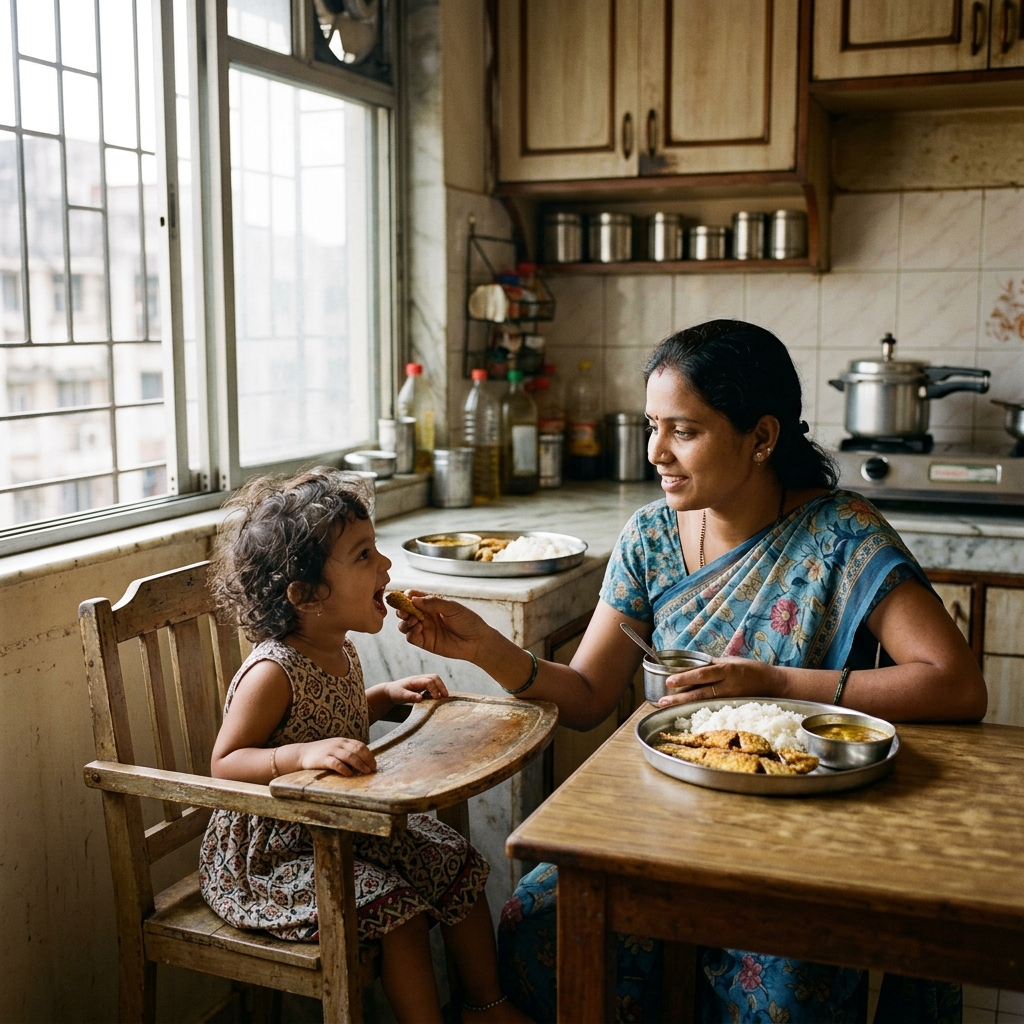
Fish & Your Child’s Brain: The Safe Seafood Guide for Thane Parents
You’ve decided it’s time. Your six-month-old is ready for solid food. Or your two-year-old has started eating at the family table. And you’re wondering — can I give them fish? Is it safe? What about the bones? Will they be okay with mercury?
These are the right questions. Every parent in Hiranandani Estate, Majiwada, or anywhere along Ghodbunder Road who cares about their child’s health asks them. This guide answers all of them — plainly, practically, without the internet’s usual panic.
Why Fish Is One of the Best Foods You Can Give Your Child
Before we get to the safety checklist, let’s start with the reason you’re asking in the first place: fish is genuinely exceptional brain food.
DHA & Omega-3: The Brain-Building Nutrient
The human brain is 60% fat. And the most critical fat for brain development in children aged 0–5 is DHA (Docosahexaenoic acid) — an Omega-3 fatty acid found almost exclusively in seafood.
Studies from AIIMS and international pediatric nutrition bodies consistently show that children who consume fish 2–3 times a week during their first five years have:
- Measurably better language development by age 3
- Higher cognitive test scores at age 5
- Stronger visual acuity in the first year
No supplement replaces the bioavailability of DHA from real fish. Not the capsule your doctor prescribes. Not the fortified baby formula.
The Safe Fish List for Children (Mumbai-Specific)
Not all fish is equal for children. Here’s a practical breakdown based on mercury levels and bone structure — specific to what’s actually available in Thane markets:
✅ Safest — Start Here (Age 6 months+)
| Fish | Why It’s Safe | How to Prepare |
|---|---|---|
| Rohu (freshwater) | Low mercury, soft flesh, minimal bones | Steam with turmeric, mash with rice |
| Pomfret (small) | Very low mercury, firm but soft flesh | Steam whole, bones easy to remove |
| Prawns (farmed) | Zero mercury risk, high protein | Boil and mash, or add to khichdi |
| Surmai steak | Low-medium mercury, boneless if steak-cut | Pan fry lightly in ghee, boneless steaks safe |
⚠️ Introduce After Age 2
| Fish | Why |
|---|---|
| Bangda (Mackerel) | Slightly higher mercury, strong flavour — fine after 2 years |
| Rawas (Indian Salmon) | Excellent Omega-3 but oily — introduce slowly |
❌ Avoid Under 5
| Fish | Why |
|---|---|
| Tuna (large) | High mercury accumulation |
| Shark / Swordfish | Banned for children by WHO guidelines |
| Any frozen imported fish | Unknown sourcing, chemical preservative risk |
The Bone Question (And How to Handle It)
The fear of fish bones is real — and understandable. Here’s how to manage it safely:
Request a specific cut. When you order from Relifish, simply tell the seller: “Bacche ke liye hai — curry cut without bones”. Our sellers clean and de-bone on request. A good fishmonger can de-bone a pomfret completely in under three minutes.
Steam first, mash second. For children under 1 year, always steam the fish fully and mash it with your fingers before feeding. Bones become immediately obvious and easy to remove.
Pomfret is your friend. A medium pomfret has a single central spine with rib bones that peel away cleanly when cooked. It’s the easiest fish for a first introduction.
The Mercury Myth — Put in Perspective
The internet has made mercury in fish sound like an immediate danger. Here’s the actual science:
Mercury accumulates in large, predatory fish that eat smaller fish their whole lives — like tuna, swordfish, or king mackerel (the large variety). The fish that are common in Mumbai — pomfret, rohu, prawns, surmai (kingfish steaks) — are all classified as low-mercury by the Indian Council of Medical Research (ICMR).
The guideline is simple: 2–3 servings per week of low-mercury fish is safe and beneficial for children. The risk of not giving your child fish — missing DHA during critical brain development years — is far greater than the risk from the fish itself.
A Practical Week Plan for Thane Parents
Here’s a simple weekly meal plan for introducing fish to a 1–2 year old:
Monday: Steam-cooked pomfret mashed with rice and a pinch of turmeric Wednesday: Prawn khichdi — boiled prawns chopped fine, added to dal-rice Friday: Soft surmai (steak cut) with a light coconut base — a small portion
Two weeks of this and fish becomes a normal part of their food vocabulary. Most children who are introduced to fish early continue eating it throughout life — which is one of the best nutritional habits you can build.
What to Look for When Buying Fish for Your Child
This is where freshness matters most. A child’s immune system is not fully developed. Stale fish carries a real risk of food poisoning that hits children harder than adults.
Always check:
- Eyes: Clear and bright. Sunken = not today.
- Smell: Ocean-clean. Any ammonia smell = return it.
- Flesh: Firm and springs back when pressed.
If you’re ordering from Relifish, our sellers work with same-day catch. You can also specify at the time of ordering: “Fresh only — bacche ke liye hai.” That instruction is taken seriously.
Start Small, Start Safe
You don’t need to overthink this. Start with half a teaspoon of mashed rohu with rice at lunch. Watch for 48 hours. No reaction? Increase gradually. By age two, fish can be a full part of your child’s weekly diet — and by five, your child will know the difference between fresh pomfret and the pale supermarket version.
That fish literacy is a gift that lasts a lifetime.
→ Order today’s fresh catch for your family at Relifish
🐟 Ordering for your child? Browse sellers on Relifish — select your fish and cleaning style directly with your seller.
📦 Delivering to: Hiranandani Estate · Majiwada · Ghodbunder Road · Kasarvadavali · Kalwa
Share this article: