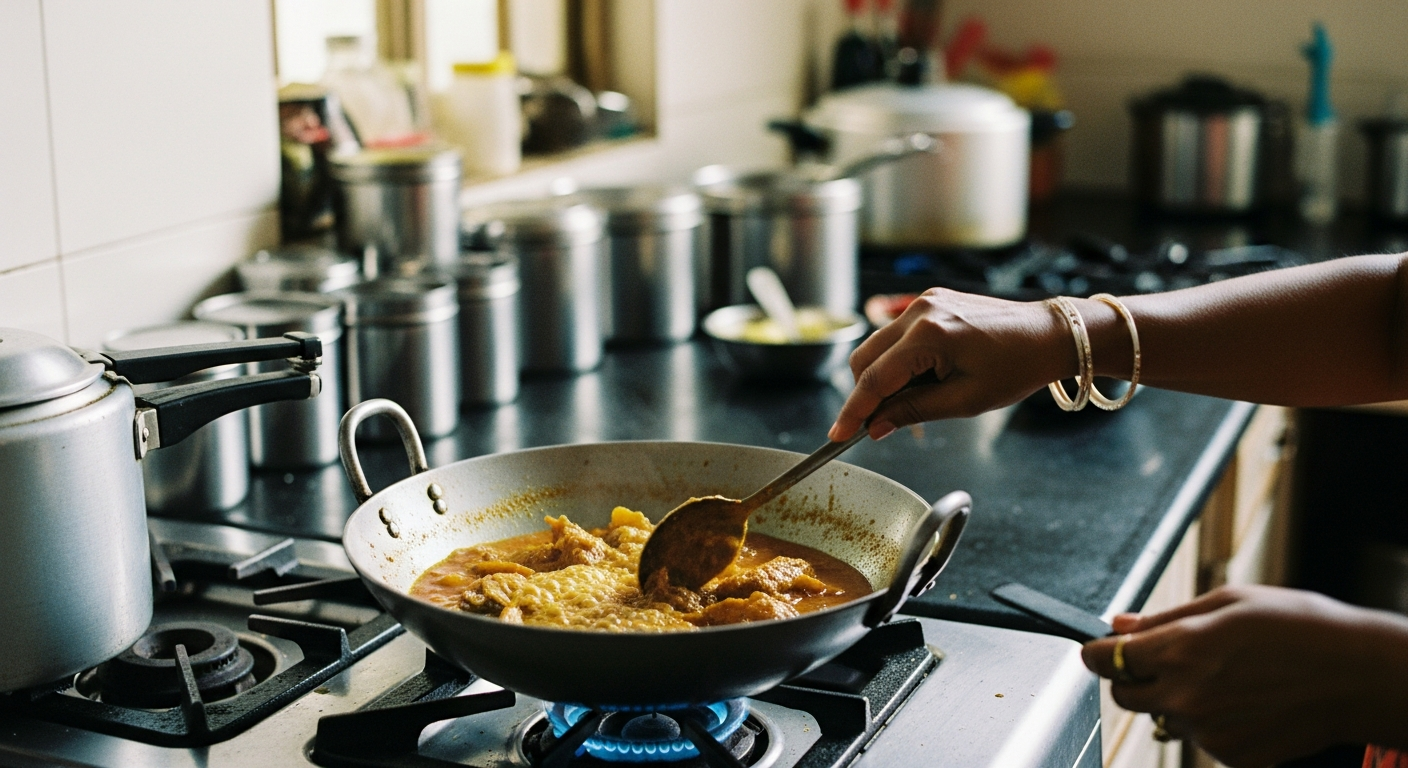
Why Your Sunday Fish Curry Never Tastes the Same Anymore
Your amma’s pomfret curry used to be unforgettable.
Same masala. Same coconut base. Same pan she’s had for twenty years. But when you make it today — even following her exact steps — something is off. The fish doesn’t absorb the spices the way it used to. The texture is softer, almost mushy. The flavour is muted.
Before you blame the recipe, blame the fish.
What Changed — And When
Ten years ago, most Mumbai households bought fish from the same hyperlocal seller who came to the building gate or the nearby mandi. That fish was caught the night before or that morning. It was sold the same day. No warehouse. No cold truck. No preservative coating.
That supply chain no longer exists for most urban families in Thane, Hiranandani Estate, Majiwada, or Ghodbunder Road.
Today, the fish in your curry most likely travelled through this route:
- Caught off the Maharashtra coast
- Loaded into a cold storage truck
- Stored in a centralised warehouse — sometimes in Bhiwandi, sometimes further
- Distributed to supermarkets, dark stores, or quick-commerce hubs
- Delivered to your doorstep — 2 to 4 days after it left the water
Each stage strips something from the fish. Texture degrades as proteins break down. The natural oils — the same oils that carry flavour into your curry — oxidise in cold storage. The flesh that was once firm enough to hold its shape in a slow-cooked gravy turns soft and falls apart before the masala even penetrates.
Your recipe is the same. The fish isn’t.
The Freshness Window Nobody Tells You About
Fish is one of the most time-sensitive foods on earth. Unlike chicken or mutton, which have a 48–72 hour window in proper refrigeration before quality drops, fresh sea fish has a genuine peak window of 6–18 hours after coming out of the water.
After 18 hours on ice, the fish is still safe to eat — but the flavour profile has already started shifting. After 48 hours, the texture has changed. After 72 hours, you’re cooking with a fundamentally different ingredient than what left the dock.
This is what local fishing households in local Mumbai fishing docks have always known. They don’t refrigerate the morning catch. They sell it by noon — or they give it away.
The urban supply chain has trained city buyers to accept 3-day-old fish as “fresh” because the packaging looks clean and the app interface looks premium.
What Genuinely Fresh Fish Actually Feels Like
If you’ve never cooked with same-day catch, here’s what you’re missing:
The smell: Clean, saline, almost neutral. Like a sea breeze, not like “fish.” If it smells strongly of fish before you’ve even started cooking, the protein breakdown has begun.
The texture: Firm flesh that springs back when pressed. It holds its shape in a curry. It doesn’t disintegrate in the first ten minutes of cooking.
The flavour absorption: Fresh fish takes masala differently. The natural oils in the flesh are intact — they carry and amplify spice flavour into every bite instead of sitting on the surface.
The colour: Bright, vivid, species-appropriate. Not the uniform pale pink or grey that indicates cold-chain handling.
When you cook with genuinely same-day fish, the difference is immediate. The curry smells better while it’s cooking. The fish holds its shape. The final dish tastes the way it used to taste — the way you remember.
Why This Is a Supply Chain Problem, Not a Skill Problem
The uncomfortable truth is that most Mumbai families are doing everything right in the kitchen — and being let down at the source. The supermarket looks trustworthy. The delivery app looks convenient. But neither can deliver what a hyperlocal seller at 7 AM at the mandi delivers.
The fish mandi model works because it has no storage. The seller brings what was caught. What isn’t sold by midday is gone. There’s no incentive to keep inventory — and no ability to pass off yesterday’s catch as today’s.
That model has been replaced by a warehouse model that optimises for delivery speed and shelf appearance, not for the thing that actually matters: when did this come out of the water.
The Simple Fix
You don’t need a new recipe. You need a new source.
Same-day catch from a verified local seller — someone whose name you know, whose ratings you can see, who lists what they actually have available that morning — changes the dish completely. Not because of anything you do differently in the kitchen. But because the ingredient is finally what it’s supposed to be.
Relifish connects Mumbai families directly to hyperlocal sellers in Thane. Every seller lists their live morning catch. You see who caught it, what’s available today, and you order before it sells out.
No warehouses. No cold chain. No 3-day-old fish dressed as fresh.
→ Check today’s live catch from local sellers
📦 Currently serving: Hiranandani Estate · Majiwada · Ghodbunder Road · Kasarvadavali
📍 Serving Hiranandani Estate · Majiwada · Ghodbunder Road · Kasarvadavali — check your area
Share this article: